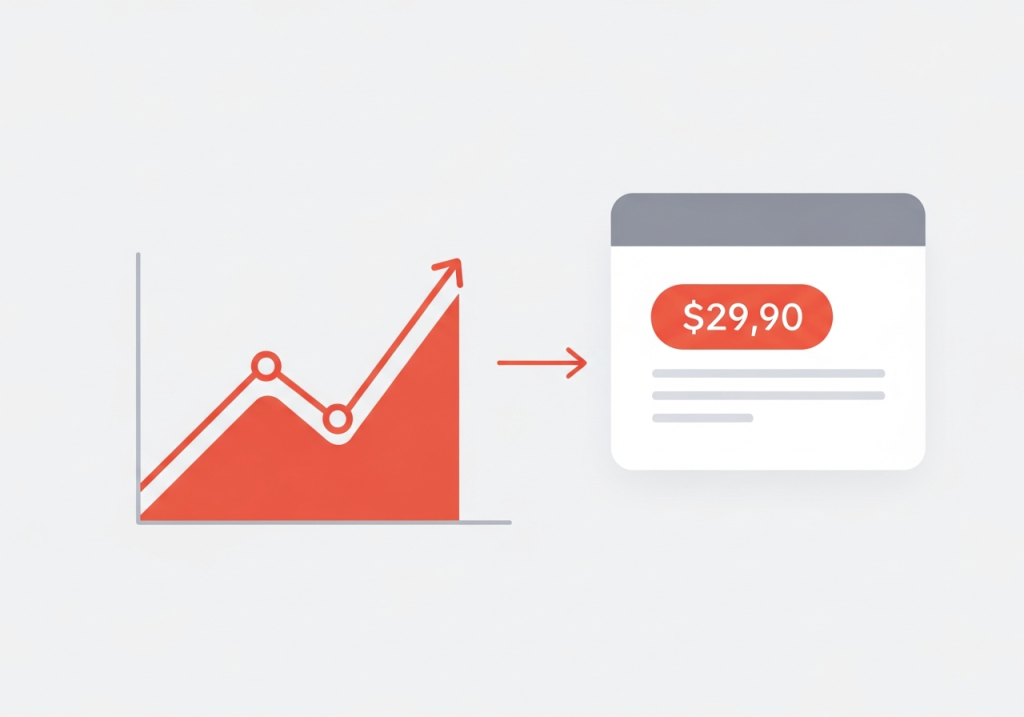
Managing pricing manually via spreadsheets is a broken process. It used to work when competition was local and product ranges were small. That is no longer the reality for modern e-commerce. You likely face thousands of competitors changing prices multiple times a day.
Relying on manual checks leads to missed opportunities. You react too slowly to market shifts. Margins erode because you lack the data to make confident decisions. Price optimizer software solves this problem. It replaces “gut feeling” decisions with data-driven strategies. It aligns competitor movements, stock levels, and commercial goals into a cohesive system.
Stop relying on manual price checks
Many retailers still cling to manual processes. They believe they have more control by checking competitors one by one. The reality is the opposite. The price optimizer software vs. manual pricing debate comes down to speed and accuracy. Manual methods cannot scale.
Monitoring thousands of SKUs across multiple competitors is physically impossible for a human team. You might finish a pricing spreadsheet on Tuesday morning. By Tuesday afternoon, that data is already outdated. This lag creates a significant cost of manual pricing. You are constantly looking at a snapshot of the past rather than the current market reality.
Data blindness creates another layer of risk. Manual checks often fail to account for shipping costs or exact product matches. You risk comparing your product to a dissimilar item because you are not matching based on EAN numbers. This leads to incorrect market positioning. You might think you are competitive. In reality, a competitor with lower shipping costs is beating you on the total price.
These competitor price tracking challenges result in lost revenue. Reactive pricing means you are always a step behind. You might respond to a competitor’s price drop three days late. You have already lost sales during that window. Conversely, you might fail to raise prices when a major competitor goes out of stock. You surrender profit margin simply because you did not see the opportunity in time.
Increase profit on underpriced products
A common misconception is that automation triggers a price war. Many retailers fear that software will simply lower prices until there is no profit left. Effective dynamic pricing software for retail does the exact opposite. It is not just about being the cheapest option on Google Shopping.
True optimization identifies where you are actually “too cheap.” You might be selling a product for $50 while your nearest competitor is at $60. You are leaving money on the table. Automation helps you safely increase that price to $59. You remain competitive while securing immediate profit margin improvement.
Automated rules also act as a safety net. You define minimum floor prices based on your internal margin requirements. The software ensures that aggressive repricing never cuts into your profitability. It prevents the destructive cycle of undercutting competitors into the red. You compete where it makes sense. You hold your ground where it does not.
Set specific rules for different products
Pricing optimization requires defined rules rather than panic reactions. The software should enable specific strategies for different parts of your catalog. You might choose to “compete on lowest price” for high-volume items to acquire customers. For unique or niche items, you might choose a strategy to “maximize margin.” Dynamic pricing benefits are realized when you apply the right tactic to the right product.
This approach allows for dynamic grouping. You can distinguish between “Basket Openers” and slow movers. Basket Openers are high-traffic items that need sharp pricing to drive site visits. Slow movers may require clearance strategies or higher margins if you are the only seller with stock. This segmentation ensures you are not applying a blanket strategy to your entire inventory.
Coordinate pricing with stock and ad budget
Pricing cannot exist in a vacuum. It must communicate with your inventory levels and marketing budget. Disconnected decisions lead to waste. You might discount a product that is almost out of stock. You might spend ad budget on a product where you are priced 20% higher than the market.
Price optimization for inventory management bridges this gap. Your pricing rules should adapt based on availability. If a product is low on stock, the software can automatically raise the price. This maximizes the value of your remaining units. It also prevents you from selling out too quickly. Conversely, you can set rules to ignore competitors who are out of stock. There is no need to lower your price to beat a competitor who cannot ship the product.
Marketing efficiency is another critical area. Ad spend is often wasted on products that are not price-competitive. Retail price optimization ROI improves significantly when you link pricing to your feed management. You can label products based on their competitiveness. This allows you to pause ads for uncompetitive items and focus your budget on high-conversion products.
A solid Google Shopping pricing strategy relies on this “Triangle of Success.” You must combine competitive data, internal performance metrics, and inventory status. This single view prevents disjointed decisions. You stop bidding on products you cannot sell profitably. You start pushing products where you have the “Buy Box” advantage.
Automate execution without losing control
Adopting new technology often brings fear of losing control. Retailers worry about a “black box” AI making decisions they do not understand. This is why the best price optimization tools are not fully autonomous entities that act without consent. They are rule-based engines designed to execute your commercial strategy.
Effective automated pricing solutions rely on human logic. You set the boundaries. You determine the minimum margins. You decide which competitors to track. The software simply executes these instructions with speed and scale that a human cannot match. It ensures that your strategy guides the automation.
PriceShape enables this scalable operation. It acts as the central engine for your pricing team. It transforms raw market data into actionable price changes across all channels. You remove the manual intervention that slows you down. You gain the ability to manage pricing for thousands of products across different countries without adding headcount.
Using PriceShape allows you to visualize historical data and competitor patterns. This brings confidence to your execution. You can see exactly why a price changed. You can track the impact on your sales volume. You move from reactive panic to confident, proactive pricing. You implement pricing software to protect your brand value and ensure consistency across marketplaces and your own webshop.
Move from reactive to strategic pricing
The shift from spreadsheets to software is necessary for survival in e-commerce. Manual pricing is error-prone, slow, and reactive. It leaves your margins vulnerable and your revenue unoptimized. Price optimizer software transitions your business to a strategic, automated system. It protects your margins, capitalizes on market trends, and unifies your pricing with inventory and marketing.
Take a hard look at your current pricing maturity. Are you reacting to the market, or are you leading it? Consider booking a demo to see how rule-based automation can unlock hidden profit in your catalog.