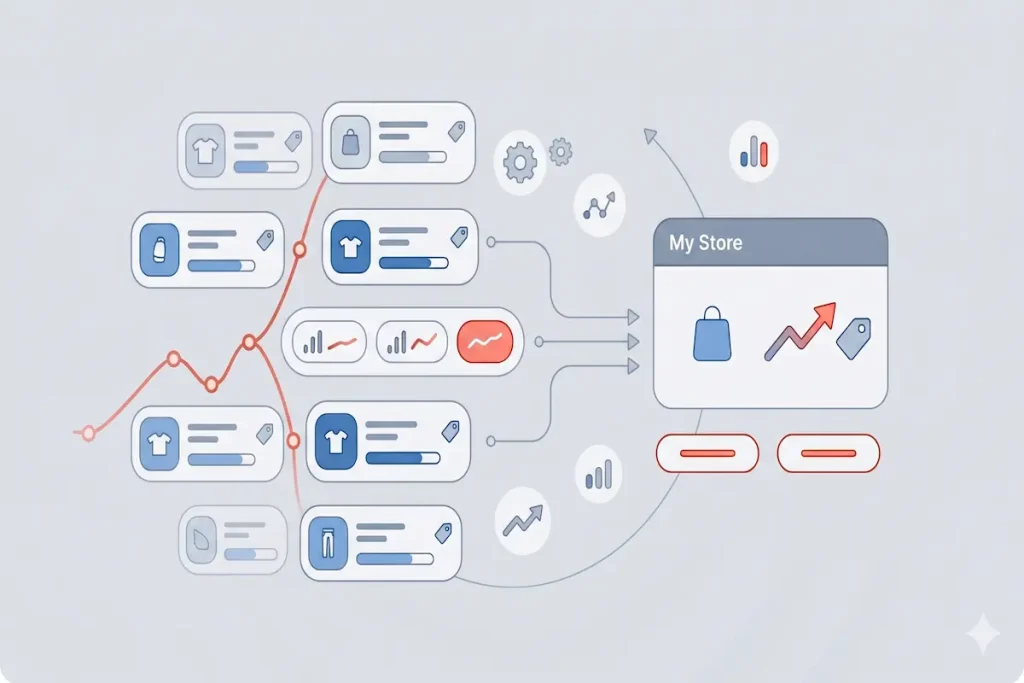
Effective competitor monitoring no longer stops at manual research or weekly reports. As e-commerce markets shift quickly, your team needs scalable systems that capture competitor price, stock and promotion price changes in real time and turn them into action.
Scalable competitor monitoring combines automation, product matching and clear workflows. It protects margin, supports sharper pricing decisions and gives commercial teams a reliable market view. This guide explains how to plan, build and optimise a monitoring setup that scales in 2026.
Understanding scalable competitor monitoring
Scalable competitor price monitoring means continuously tracking rival activity across pricing, stock availability, promotions and assortment through automated systems that grow with your business. The goal is to surface useful commercial signals without flooding teams with noise.
For e-commerce leaders, this visibility shapes daily pricing and category decisions. It helps you react faster to price changes, protect margin targets and spot gaps in availability or assortment. Automation also reduces manual work and lets pricing, ecommerce and purchasing teams operate from one view of the market.
Common use cases include:
- Dynamic pricing: adjusting prices in line with market movement and business rules
- Assortment and availability analysis: spotting stock outs, gaps and substitute products
- Promotion tracking: understanding discount pressure across competitors and channels
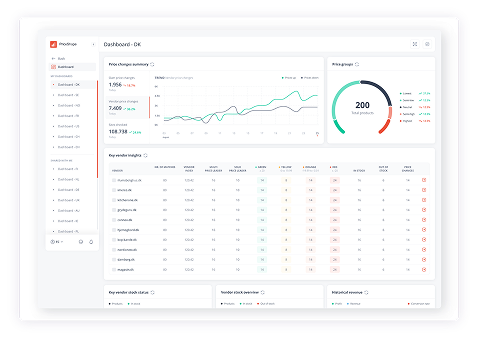
Modern systems combine continuous data collection with rules, prioritisation and workflow integration. That creates an operational market intelligence engine, not a static report. With a platform like PriceShape, competitor price and stock data can support better pricing decisions at scale.
Defining your competitor monitoring scope
Before adopting tools, define what to watch and why. Start with five to ten core competitors. That focus reveals real pricing patterns without cluttering your dashboards.
Segment your list into key groups:
- Direct product rivals: retailers selling the same SKUs or close substitutes
- Marketplace sellers: sellers competing on price, stock or delivery terms in the same channel
- Strategic price leaders: retailers whose price moves shape the category, even when assortment overlap is only partial
Next, decide which insight types matter most. Price position and promotions support daily pricing. Stock visibility highlights lost demand and market gaps. Assortment comparisons show where competitors are broader, deeper or missing key products.
| Competitor type | Insight focus areas | Example application |
|---|---|---|
| Direct product rivals | Pricing, stock, promotions | Match margin safe discounts |
| Marketplace sellers | Seller count, delivery terms, offer price | Stay competitive on marketplaces |
| Strategic price leaders | Category pricing patterns, promotion depth, assortment breadth | Set pricing rules by category |
Keep your scope tied to clear commercial goals such as protecting margin, maintaining a target price index or improving category competitiveness. PriceShape helps teams focus on the right competitors, channels, brands and product groups.
Building a three layer competitor monitoring architecture
A reliable competitor monitoring system works in three coordinated layers. Each one adds structure and value to raw market data.
Data collection
Monitoring tools capture competitor prices, stock status, promotions and product page changes across retailers and marketplaces.
Business context and analysis
Product matching, normalisation and rules determine which changes matter most and how they affect price position or margin.
Smart delivery
Prioritised insights flow into dashboards, alerts or pricing workflows so teams can act quickly.
The flow is simple: data collection, product matching and normalisation, rule based prioritisation, then business action.
Platforms built for e-commerce price intelligence follow this structure. The value increases when competitor signals are tied to your own pricing goals, margin logic and product priorities.
Essential tools for competitor monitoring
The competitor monitoring software landscape for e-commerce pricing is more focused than the broader competitive intelligence market. The core categories are:
- Price monitoring platforms: track competitor prices, stock and promotions across large catalogues
- Product matching and data quality layers: make sure you compare like for like products
- Marketplace monitoring tools: track sellers, delivery terms and channel specific offer pressure
- Reporting and alerting layers: push the right signals into dashboards, email or team workflows
| Tool category | Key function | Ideal use case |
|---|---|---|
| Price monitoring platform | Competitor price, stock and promotion tracking | Daily pricing and margin decisions |
| Product matching layer | SKU level matching and normalisation | Reliable comparisons at scale |
| Marketplace monitoring | Seller and offer tracking | Marketplace competitiveness |
| Alerting and reporting layer | Alerts, dashboards and exception views | Faster team response |
Real time competitor price monitoring is the core layer. Platforms such as PriceShape combine data collection, product matching and automated workflows to keep comparisons accurate and actionable across thousands of SKUs. Many e-commerce teams use this data directly in pricing operations instead of treating it as a separate reporting exercise.

Automating insights delivery and human validation
As automation expands, timing and accuracy both matter. Set up automated reporting that helps pricing analysts, ecommerce managers and buyers respond quickly.
Automated summaries save time, but human validation still matters for high impact events such as aggressive repricing, broken product matches or sudden stock shifts. A strong setup automates routine updates and escalates strategic outliers for review.
Define your workflow clearly:
- Automatic alerts for price, stock or promotion changes on priority SKUs
- Daily dashboards for category level price position and competitor availability
- Manual checks for major deviations, bad matches or new competitors
Keep refresh rates aligned with the speed of the category. For fast moving pricing environments, daily or intraday updates prevent lag and reduce missed opportunities. PriceShape fits this cadence by helping teams track important competitor changes and act through clear pricing rules.

iEar x PriceShape
iEar uses PriceShape to automate competitor monitoring and pricing decisions, improving Google Shopping performance.Measuring and optimising your competitor monitoring programme
You cannot improve what you do not measure. Monitoring product performance should be reviewed as closely as pricing performance itself.
Track key metrics such as:
- Time saved compared with manual checks
- Speed of reaction to competitor price changes
- Share of monitored alerts that lead to action
- Margin protection and price index control
- Coverage of matched products across priority competitors
| KPI | Measurement method | Outcome target |
|---|---|---|
| Alert to action time | Compare before and after automation | Faster response times |
| Matched catalogue coverage | Share of priority SKUs with valid competitor matches | Higher coverage in key categories |
| Margin protection | Margin before and after rollout | Fewer avoidable margin losses |
| Price index control | Track price position against selected competitors | More stable category position |
Schedule quarterly reviews to refine your competitor list, matching logic and alert thresholds. Markets shift, assortments change and low value alerts build up over time. Regular review keeps the setup accurate and commercially useful. Platforms like PriceShape make it easier to adjust scope and rules without disrupting day to day pricing work.
FAQ
How many competitors should you monitor for useful pricing insights?
Monitoring 5 to 10 competitors is enough for most ecommerce teams. Start with direct rivals and key marketplace sellers that overlap strongly with your catalogue.
What competitor data matters most for pricing teams?
Pricing, stock availability, promotions and assortment overlap usually matter most. These signals directly support price position, margin protection and category decisions.
How does automation improve competitor monitoring without reducing quality?
Automation speeds up data collection, matching and alerts. Human review still catches bad matches and high impact events. The strongest setups combine both.
What are best practices for integrating competitor data into ecommerce workflows?
Route important alerts into the tools your pricing and ecommerce teams already use. Prioritise exceptions, high value SKUs and category views instead of sending every data point to every team.
How often should competitor data be updated for pricing decisions?
Daily updates are a strong baseline. Faster moving categories often need intraday monitoring so pricing decisions stay aligned with market changes.