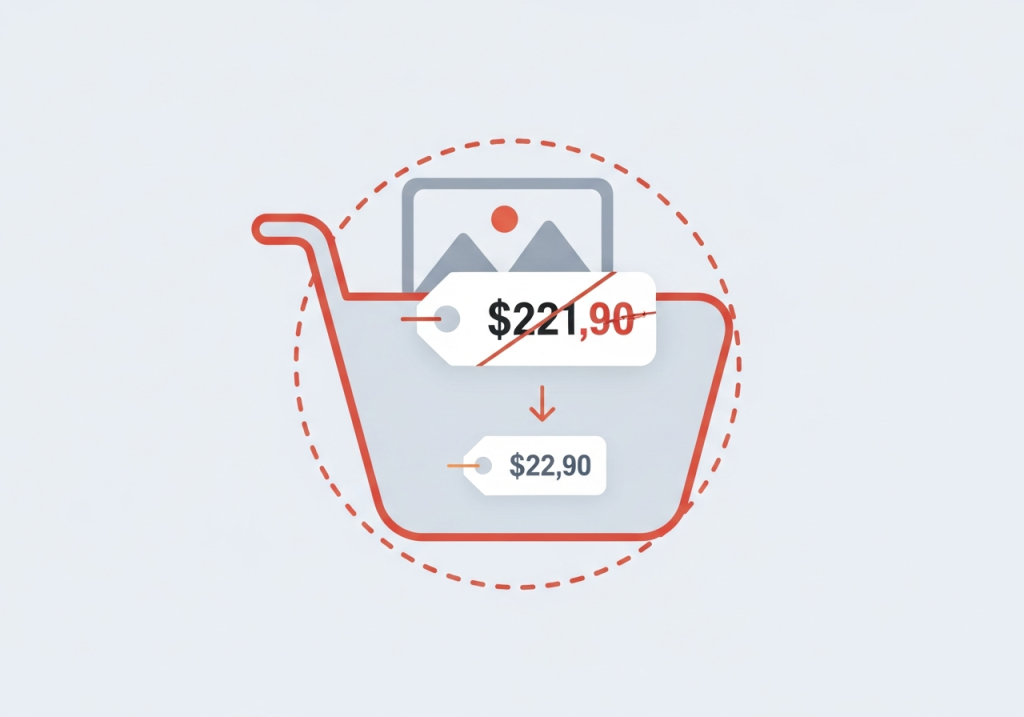
High traffic volume is meaningless if your visitors do not buy. You spend significant budget on ads and SEO to get them to your site. They browse your products. They add items to their carts. Then they leave.
This drop-off is frustrating. It signals a disconnect between what you offer and what the customer expects. The core problem is often price mismatch. Retailers frequently fail to recognize that static pricing creates friction with real-time market conditions. This failure directly kills conversion rates. Customers are savvy. They know how to find the best deal in seconds. If your pricing strategy remains static while the market moves, you lose the sale.
Identify where price causes customers to leave
You need to understand where you lose your customers. Identifying the specific point of abandonment helps you determine if price is the primary culprit. Many store owners ask why your ecommerce traffic isn’t converting. The answer often lies in comparison shopping behavior.
Customers rarely look at a single product page in isolation. They open multiple tabs. They check Amazon. They check your direct competitors. If a customer leaves your product page or abandons their cart, they are likely price-checking. This is a critical moment in the customer journey.
You must also look beyond the sticker price. Customers make purchase decisions based on the total cost. This includes the item price plus shipping fees. Looking at the product price alone is misleading. Your item might be five dollars cheaper than a competitor. However, if your shipping is ten dollars more, you are actually more expensive. This total cost mismatch creates immediate friction.
Manual tracking cannot solve this issue. You cannot keep up with thousands of daily competitor price changes on your own. Effective ecommerce conversion rate optimization strategies require a deeper analysis of your position in the market. You need to know if you are priced out of the conversation before the customer even lands on your site.
Pinpoint where you lose the most customers
Start by auditing your analytics. Look for high exit rates on specific product pages. Look for cart abandonment rates that spike for specific categories. These are indicators that your value proposition does not align with market expectations. You need to understand how to fix price mismatch in ecommerce conversions by gathering the right data. Without context on past price moves relative to competitors, you cannot explain why sales dropped.
Stop guessing what customers will pay
Many retailers rely on intuition. You might lower a price because sales feel slow. You might raise a price because you think the brand value supports it. This approach is dangerous. Pricing decisions based on intuition are unreliable. It is extremely difficult to correlate these gut changes with real metrics like net profit.
This lack of data leads to “blind” pricing. You essentially guess what the market will accept. The biggest risk here involves your competitors’ inventory. Retailers often lower prices unnecessarily to compete with rivals who are actually out of stock. If your competitor has no inventory, you are competing against a ghost. You slash your margins to beat a price that customers cannot even access.
Reactive discounting destroys your bottom line. It does not guarantee sales if you ignore inventory data. You need pricing optimization software for online stores to see the full picture. Sustainable growth requires integrating competitor data, stock levels, and demand trends into one single view.
See how manual tracking hurts your margins
Relying on manual checks or intuition creates several blind spots in your strategy:
- You waste margin by discounting products when you are the only seller in stock.
- You lose sales by keeping prices high when a competitor runs a flash sale.
- You fail to react to market trends until it is too late to capture the revenue.
- You spend hours manually adjusting spreadsheets instead of focusing on strategy.
Implementing ecommerce dynamic pricing to reduce cart abandonment requires precision. You must move away from guesswork. You need data-driven pricing decisions that account for availability as much as the dollar figure.
Automate pricing updates to match market speed
The manual approach is too slow. The market changes every minute. You need a system that adapts instantly. This is where intelligent automation comes into play. However, many retailers fear automation. They worry about an AI “black box” lowering prices to zero. This is a valid concern with low-quality tools. High-quality dynamic pricing tools ecommerce professionals use operate differently.
PriceShape helps clients set pricing rules that match their specific strategies. It is not a fully AI platform acting without knowledge. You remain in control. You set the parameters. The software simply executes your strategy faster than any human could. This allows you to deploy the best ecommerce pricing tools for higher conversion rates without sacrificing your brand integrity.
You can ensure you never miss a market movement. If a competitor raises their price, your price can increase automatically to capture more margin. If they drop their price, you can adjust to remain competitive, provided it stays within your safety limits.
Protect your profit margins while staying competitive
Profit margin protection is the foundation of automated repricing software. You define “floor prices” for every product. This ensures your price never drops below a profitable threshold. You prevent a race to the bottom. You maintain conversion-friendly price points without bleeding revenue.
You can also utilize “Smart” Campaign pricing. This allows you to offer dynamic discounts. For example, you can advertise “up to 20% off” but the system only lowers the price enough to win the sale. If a 5% discount makes you the cheapest option, the system stops there. You win the conversion and keep the extra 15% of margin.
Stop paying for ads on overpriced products
Pricing and marketing must work together. Spending budget on products that are too expensive to convert results in wasted clicks. If your price is 20% higher than the market leader, running Google Ads on that product is burning cash. Users will click, see the price, and leave. This hurts your conversion rate and your wallet.
You can drive ecommerce marketing spend efficiency by linking your pricing rules to your ad feed. This ensures aggressive bidding only occurs on products with sufficient margin and a competitive price point. This is the core of google shopping optimization pricing.
Leverage PriceShape to add custom labels to your product feeds. You can tag items as “Competitive,” “Low Stock,” or “High Margin.” You can then filter your ad spend in Google Ads or Meta based on these labels. You stop bidding on items where your price is uncompetitive. These clicks deplete budget without driving revenue.
Direct traffic to products that are ready to sell
Focus your budget on “Basket Opener” products. These are items where small price adjustments drive high traffic. Once the customer is on your site, you can use cross-sells and upsells to increase the average order value. By aligning your ad strategy with your pricing reality, you dramatically improve your return on ad spend. Improving roas with dynamic pricing is about directing traffic to the products that are actually ready to sell.
Remove price friction to recover lost revenue
Conversion rate optimization in ecommerce relies on removing friction. Price is the ultimate friction point. You cannot fix this with better images or faster site speed alone. You need real-time data and dynamic adjustments to align with the market. Stop guessing and start using data to protect your margins.
Take a hard look at your current setup. Identify where price mismatches are costing you sales. Book a demo with PriceShape today to see how intelligent pricing rules can recover lost revenue.