


What is dynamic pricing? A complete guide
More and more retailers are using dynamic pricing in the face of difficult economic headwinds. But dynamic pricing is often misunderstood, and even seen as a negative by some. In fact, the opposite is true.

Senior Marketing Specialist
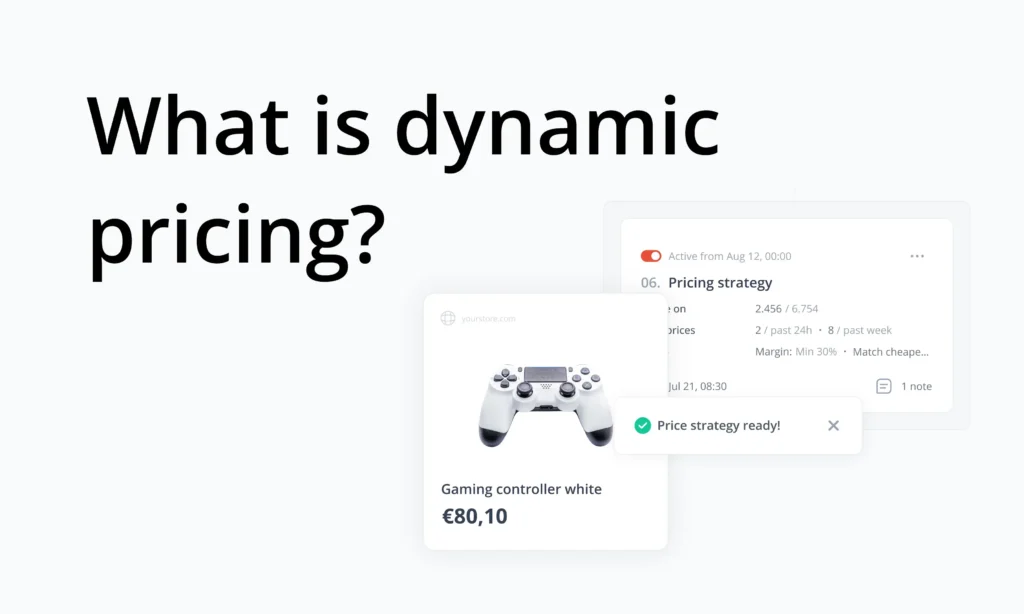
Dynamic pricing is a simple and effective way to maximise revenue-per-product, and increase profits, all while keeping your prices competitive. But what actually is dynamic pricing? And how does it work in practice?
In this complete guide, we’ll answer those very questions. We’ll cover:
- What is dynamic pricing
- How does dynamic pricing work?
- What are some examples of dynamic pricing strategies?
- How to get started with dynamic pricing
- Top dynamic pricing tools
What is dynamic pricing?
Dynamic pricing is a revenue management tactic whereby retailers raise and lower their prices to be the most competitive in the market. They do this so that they can sell as many products as possible with as great a margin as possible.
Price isn’t the only factor in dynamic pricing. Successful dynamic pricing strategies also include other factors, such as competitors’ stock levels, product type, and seasonal trends.
You can run a dynamic pricing strategy manually, which risks a lag between data timeliness and adjustment, or automatically, which runs off fresh data. In an automated strategy, data is sometimes pulled multiple times a day.
It’s often thought that dynamic pricing only lowers pricing, running the risk of a race to the bottom. This simply isn’t the case. In fact, dynamic pricing raises prices as often as it lowers them.
How does dynamic pricing work?
Dynamic pricing works by adjusting your price so that you’re better placed to win more sales. It both raises and lowers prices. So, when a competitor drops a price below yours, or when they raise a price, your prices are automatically adjusted to remain competitive. This is why there’s also often the opportunity to increase your price and still be the cheapest. For example, if you’re selling mascara at €9 a tube, and your competitor is selling it at €10, you can raise your price to €9.90 and still be the cheapest.
It’s fair to say that, when done manually, repricing can be a large admin burden for your team. That’s why it’s best to use a dynamic pricing software that automates your prices, but still allows you to manually override if you’re not happy with an adjustment.
When you find the right dynamic pricing software for your business, you can also implement different pricing strategies in different markets, even if it’s for the same product.
What are some examples of dynamic pricing strategies?
There are countless different pricing strategies that you can run with dynamic pricing. Here are just a few of the most common ones.
1. Competitive pricing
Competitive pricing is where your prices move based on your competitors’ prices. With the right software, like PriceShape, you can build rules that react to competitor data that’s updated daily on parameters such as their prices, stock levels, and shipping costs.
2. Basket-opening
A basket-opener strategy is one where you discount products you know sell well, be that seasonally or overall. It might be that these products generate little profit, but they help drive attention to your store and encourage customers to stay. If a shopper opens a basket, and feels like they’re getting a good deal, they’re more likely to complete their purchase.
3. Seasonal discounting
Instead of dropping prices drastically all at once, seasonal and discount-based pricing applies progressive discounts across multiple periods. This helps you sell gradually while protecting your margins and maintaining pricing consistency.
4. Penetration pricing
Penetration pricing is where you launch a product at a low price to quickly gain market share and attract new customers. As your market share grows, you can update your strategy and adjust pricing to reflect your market position. This gives you a flexible way to enter the market aggressively while protecting your margins and positioning.
5. Perceived pricing
Value-based pricing focuses on setting prices according to the perceived value of your product, rather than solely on costs or competitor prices. This is particularly common with electronics products, such as Apple and Samsung.
6. Psychological pricing
Psychological pricing works by setting a slightly lower than usual price to draw shoppers’ eye in. For example; pricing a product at €4.97 can feel like a better deal than €4.99. €0.97 is also more unusual than €0.99 so this draws extra attention.
How to get started with dynamic pricing
Dynamic pricing relies on scalability, and that all starts with the right software. At its most basic level, dynamic pricing software automates price adjustments, reducing manual work. But the right software to get started with takes more into account than price only.
A good example of this is stock levels. If a competitor runs out of stock, you can raise your price to sit above them, as they could never win that sale anyway. If your prices had been adjusted to match the out-of-stock vendor, you’d have given away margin for nothing.
That’s why, before making any decisions, it’s important to spend time finding the right software for you. If you’d like help with that, reach out to us for a no obligation conversation.
Top 6 dynamic pricing tools
1. PriceShape
PriceShape is a pricing tool with a data foundation, founded and based in Denmark. It comes with the MarketMap, one of the largest e-commerce databases in the world, comprising tens of billions of data points covering 1.5million retailers and 150,000 brands across more than 60 countries. This vast dataset informs every dynamic pricing adjustment the platform makes. PriceShape even comes with the option to scrape data multiple times a day, perfect for your more volatile SKUs, and those busy seasons, like Black Friday.
2. Price2Spy
Price2Spy, also known as P2S, is a Serbian tool that tracks competitors and marketplaces. You can see when a price moves across your assortment and its variations, letting you know when you’re no longer in prime position and need to act.
3. Dealavo
Dealavo, a Polish tool, integrates with your tools to ensure that any and all dynamic pricing changes it makes are recorded in the systems your team actually uses. This means that you can act quickly when the market changes.
4. Comptera
Founded in Ukraine, Comptera uses current and recent data to forecast how prices are likely to change. So, you can plan into the near-future. Comptera also adjusts prices when the market moves.
5. Prisync
Turkey-based Prisync tracks competitor prices and stock levels, adjusting prices automatically when there’s room to do so. Prisync also comes with dedicated marketplace tracking, as well as the ability to adjust across variants.
6. Omniaretail
Omniaretail is a Dutch dynamic pricing tool that runs using AI. Often called the ‘first agentic pricing platform’, Omniaretail uses AI to replace your existing dynamic pricing tech stack with an all-in-one tool.
The key takeaways
Dynamic pricing can be done manually. But this relies on spreadsheets, hours of your teams’ time, and data that’s potentially out-of-date. This leaves plenty of room for error. With the right software, you can adjust your prices automatically. Many dynamic pricing tools adjust based on both your competitors’ prices and their stock levels. It’s the strongest tools, however, that draw on current and historic data to show you what has sold and where, as well as the layout of the current market.
Dynamic pricing FAQs
How does dynamic pricing work?
Dynamic pricing adjusts your prices automatically based on live market data, including competitor prices, stock levels, and delivery costs. Instead of updating prices by hand, you set the rules, and PriceShape keeps your prices in line with the market, protecting your margin and saving your team hours of manual work.
You decide how hands-on you want to be: let price updates run fully automated, review and approve changes first, or receive suggestions and update prices yourself.
How does PriceShape collect competitor pricing data?
We’ve built our own scraper technology, with multiple ways of finding vendors for your products and a thorough process to validate the data, combining AI checks with manual review.
This is paired with a multi-tier approach to accessing sites, using the latest available tools, so your data stays accurate and up to date. You’re welcome to start a free trial and see the data for your own products.
What happens if a competitor's price drops below my price floor?
If a competitor drops their price below the floor you’ve set, your price will only move down to that floor and no further. You stay in control of the lowest point you’re willing to price at, even when the market moves quickly.
Can PriceShape automate pricing for campaigns and promotions?
Yes. Rather than applying one flat discount across a group of products, you can build rules for campaigns such as “up to 20% off” that adjust automatically based on what competitors are doing. This keeps your campaigns competitive without giving away more margin than necessary.
How quickly can I set up dynamic pricing rules?
Once you’ve defined your rules for margin, competitor position, and stock, PriceShape applies them automatically across the products you choose. You set it up once, and the platform handles the repricing from there, freeing your team from constant manual updates.
What makes PriceShape the best dynamic pricing software?
PriceShape runs its own scrapers rather than buying in third-party data, so pricing decisions are based on data we can vouch for. Daily updates, years of market memory data, and recommendations from Penny give you a full picture of your market, while you keep full control over the rules and thresholds your prices follow.